
Test your sixth sense, one card at a time.
Can you sense what's hidden? Guess the card, get no hints until the end, then see your hits stacked against pure chance — with real statistics, not wishful thinking.
Free to play · takes about 2 minutes · no card counting, just intuition.

What is ESP?
Extra-sensory perception is the idea that we can sometimes know things without using the ordinary five senses — a hunch that turns out right, a feeling about who's calling before you check.
We don't ask you to believe — we ask you to test.
For nearly a century, researchers have measured ESP with a beautifully simple tool: a deck of symbol cards. You try to sense which one is hidden, guess after guess, and your hits are compared against what luck alone would produce. ESP Champ is that test, modernized — no feedback to bias you mid-game, and honest numbers at the end.
chance
chance
chance
How it works
Three steps, a few minutes, and a result you can actually trust.

Pick your deck
Choose 4, 8, or 16 symbols and how many guesses you want to make. More cards and more attempts make a stronger test.
Sense & guess
Each turn one card is secretly chosen. You pick the one you sense is the target — with no feedback at all until the very end, so nothing biases your run.
See the verdict
We compare your hits to chance and show a p-value — the odds a result this strong could happen by luck. Then we track your trend across every game.
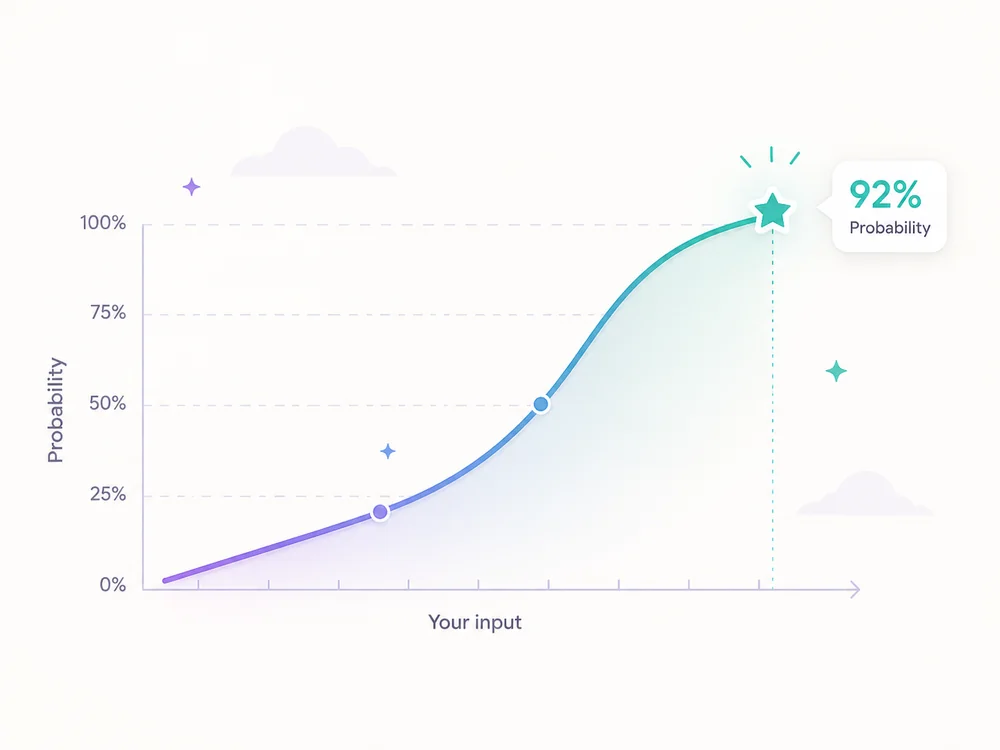
See the math, not just a hunch
Anyone can have a hot streak — luck produces those too. ESP Champ shows you the part that matters: your hit rate versus the chance line, a significance verdict, and a trend chart across many sessions. A single game never proves anything; a pattern that holds up is the interesting story.
Best practices for successful ESP
Whether ESP is real is exactly what you're here to test — but practitioners and researchers point to a few conditions that seem to help. Treat these as ways to give your intuition a fair shot.
Get calm and quiet first
The strongest results in the research tradition came from relaxed, low-distraction states. Take a breath and start when your mind is settled — not rushed.
Trust your first impression
The instant, pre-analytical hit is the one ESP practitioners value. The moment you start reasoning your way to an answer, you've left intuition behind.
Don't try too hard
Straining tends to backfire. Hold the question lightly — a relaxed "letting it come" beats forcing it.
Stay open and curious
In ESP research, people open to the possibility tend to score above those who are sure it's impossible. Curiosity helps; cynicism gets in the way.
Protect your focus
Play when you're rested and undistracted. Quality of attention matters more than the number of guesses you rush through.
Practice consistently
Like any subtle skill, regular short sessions beat occasional marathons. A few focused games often tell you more than one long, tiring run.
Judge the trend, not the streak
A hot run feels amazing, but watch your average across many games against the chance line — that's where a real signal would show up.
Stay honest with yourself
No peeking, no second-guessing the scoring. The result only means something if the conditions are clean.
Ready to test your sixth sense?
Create a free account and take your first test — the statistics don't lie.
Create free account